What Causes Lower Left Back Pain in Females? (Common Causes and When to See a Doctor)

Lower left side back pain doesn't come labeled with its cause. The same one-sided ache can be produced by at least half a dozen different systems in your body, muscle, hormone, kidney, or reproductive, and the right next step depends entirely on which one it is.
Short answer: lower left side back pain in females is usually caused by a muscle strain, menstrual cramps, or pregnancy-related changes. It can also be linked to hormonal shifts, gynecological conditions like endometriosis, or a kidney issue.
Because muscles, kidneys, the colon, and reproductive organs all sit close together in this area, the same ache can mean very different things depending on what else you're feeling. This guide breaks down the likely causes, how to tell whether it's your cycle or something else, and when to call a doctor.
Back pain also isn't evenly distributed by gender. CDC survey data shows 40.6% of women report back pain versus 37.2% of men, and much of that gap traces back to the female-specific causes below.
Quick-Reference: What Might Be Causing It
Acute vs. Chronic: a kidney stone, muscle strain, or ovarian cyst tends to show up suddenly and count as acute pain, while endometriosis, SI joint dysfunction, and cyclical hormonal pain are more often chronic, recurring, or persisting over weeks and months.
Is This Urgent? A Quick Self-Check
Most lower left side back pain in females isn't an emergency, but a few symptom combinations mean you should get seen quickly.
Usually safe to manage at home: mild to moderate pain that worsens with movement, with no fever, numbness, or bleeding.
See a doctor within a few days: pain lasting more than 1 to 2 weeks, disrupting sleep, or showing up every cycle right before your period.
Seek care right away:
Fever or chills
Burning, painful, or bloody urination
Numbness, tingling, or weakness in a leg
Loss of bladder or bowel control
Sudden, severe pain that doesn't ease with rest
Heavy or unusual vaginal bleeding
If any of these apply to you, treat this article as background reading, not a substitute for getting checked out today.
Common Causes of Lower Left Side Back Pain in Females
1. Hormonal and Menstrual Causes
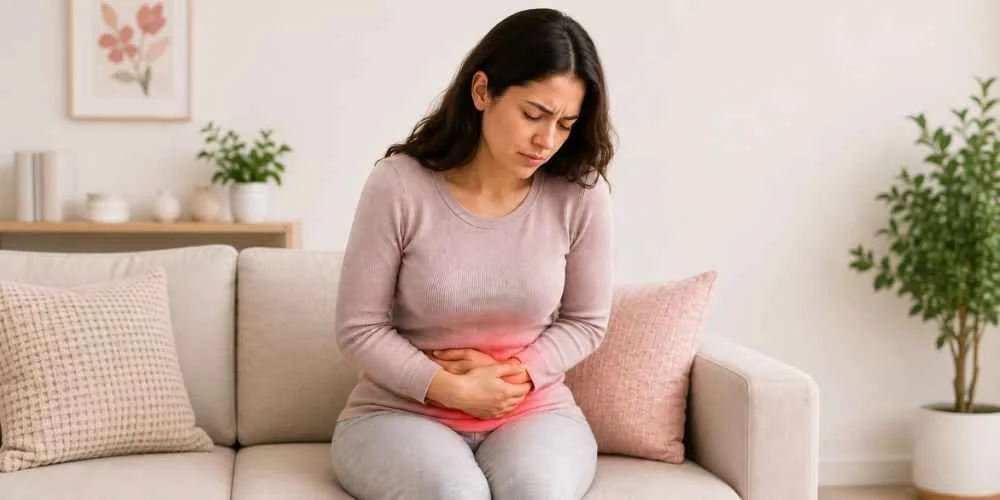
For a lot of women, the lower left back pain pattern is simply their cycle.
During menstruation, your body releases prostaglandins, hormone-like compounds that trigger the uterus to contract and shed its lining. Those contractions don't stay neatly contained to your pelvis; they commonly radiate into the lower back, and because the uterus can tilt or apply slightly asymmetric pressure, many women feel it more on one side.
This is extremely common. Research in American Family Physician puts dysmenorrhea (painful periods) at 50% to 90% of women of reproductive age, making it one of the most common reasons for cyclical one-sided back pain.
Beyond menstruation itself, estrogen and progesterone both influence the ligaments and muscles supporting your lower back, which is part of why puberty, pregnancy, and perimenopause are all associated with new or changing back pain patterns.
Signs it's hormonal/cyclical:
Shows up in the days before or during your period
Comes with cramping, bloating, or breast tenderness
Eases once your period ends
Has followed roughly the same pattern for months or years
2. Pregnancy-Related Pain
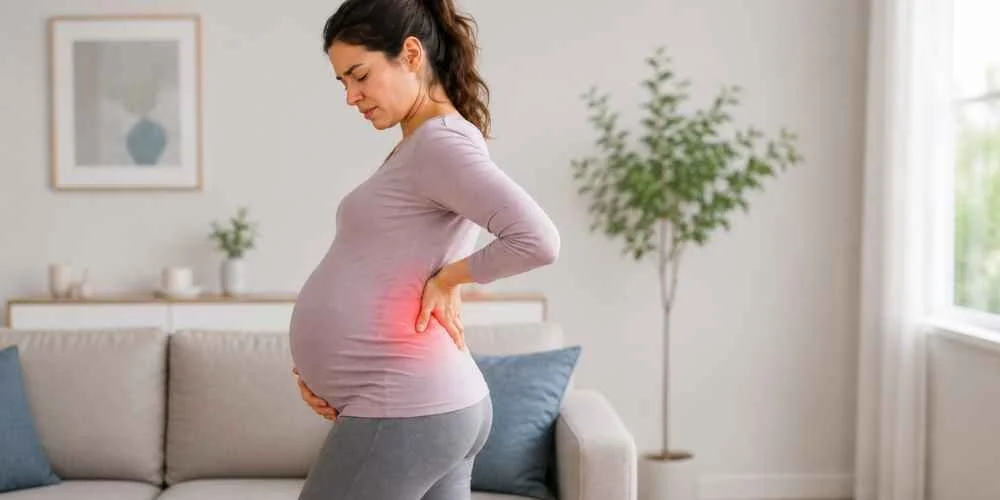
Back pain in pregnancy is less "if" and more "when." A global meta-analysis in BMC Pregnancy and Childbirth found a pooled prevalence of 40.5% across pregnancy overall, climbing to 47.8% in the third trimester as the extra weight and shifting posture put more strain on the lower back.
Two things are usually driving it:
Hormonal loosening: Relaxin and other pregnancy hormones loosen the ligaments around your pelvis to prepare for delivery, which can leave your lower back less stable in the meantime.
Shifting center of gravity: As the baby grows, your posture naturally adjusts, adding load to the lower back and sometimes to one side more than the other, especially if the baby is positioned toward that side.
Most pregnancy-related lower left back pain is uncomfortable but not dangerous. That said, contact your OB promptly if it's paired with:
Vaginal bleeding
Fever or chills
Painful urination
Numbness, tingling, or leg weakness
Pain that's sudden, severe, or rhythmic (which could signal contractions)
3. Gynecological Causes
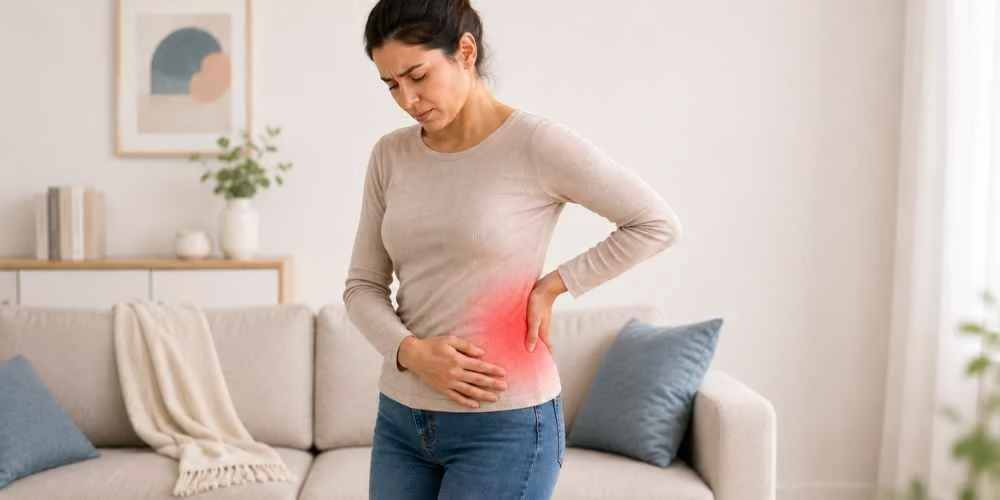
When the pain doesn't line up neatly with your cycle, or it's accompanied by other reproductive symptoms, it's worth considering a gynecological cause.
Endometriosis
Endometriosis occurs when tissue similar to the uterine lining grows outside the uterus, often on the ovaries, fallopian tubes, or pelvic lining. According to the World Health Organization, it affects an estimated 10% of women of reproductive age worldwide — around 190 million people. Back pain is a common accompanying symptom, alongside:
Pain during sex
Heavy or irregular periods
Pain during bowel movements or urination
Fatigue and bloating
Difficulty conceiving
Ovarian Cysts
Fluid-filled sacs on the ovaries are common and often harmless, but a larger cyst or one that ruptures or twists (ovarian torsion) can cause sharp, one-sided lower back or pelvic pain, sometimes severe enough to require urgent care.
Uterine Fibroids
Fibroids are benign growths on the uterus. Depending on size and location, they can press on nearby structures and cause dull, one-sided back pain along with heavier periods and pelvic pressure.
Pelvic Inflammatory Disease (PID)
PID is an infection of the reproductive organs, often resulting from an untreated STI. It typically causes lower abdominal pain, but a dull ache can radiate into the back. PID needs prompt medical treatment, so pair back pain with fever, unusual discharge, or pelvic pain and get evaluated quickly.
4. Kidney and Urinary Causes
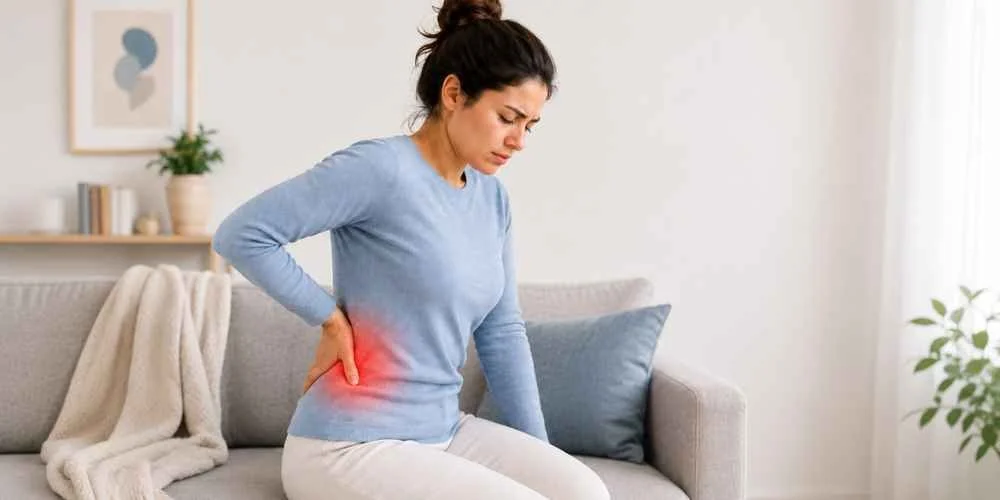
Your left kidney sits tucked up under the lower left ribs, close enough to the back that kidney problems very often show up as back pain rather than "kidney pain."
Kidney infection (pyelonephritis) typically starts as a bladder infection that spreads upward. Watch for:
Fever and chills
Pain that doesn't ease with position changes
Burning or frequent urination
Cloudy, dark, or bloody urine
Fatigue or nausea
Kidney stones can cause sudden, severe, wave-like pain as a stone moves through the urinary tract, often described as one of the more intense pains a person can experience. It may radiate from the back toward the groin and is frequently accompanied by nausea or blood in the urine.
Unlike muscular pain, kidney-related back pain usually doesn't ease when you change position or lie down; it tends to stay constant regardless of movement, which can help you tell the two apart.
Both conditions warrant medical attention rather than home treatment.
5. Musculoskeletal Causes
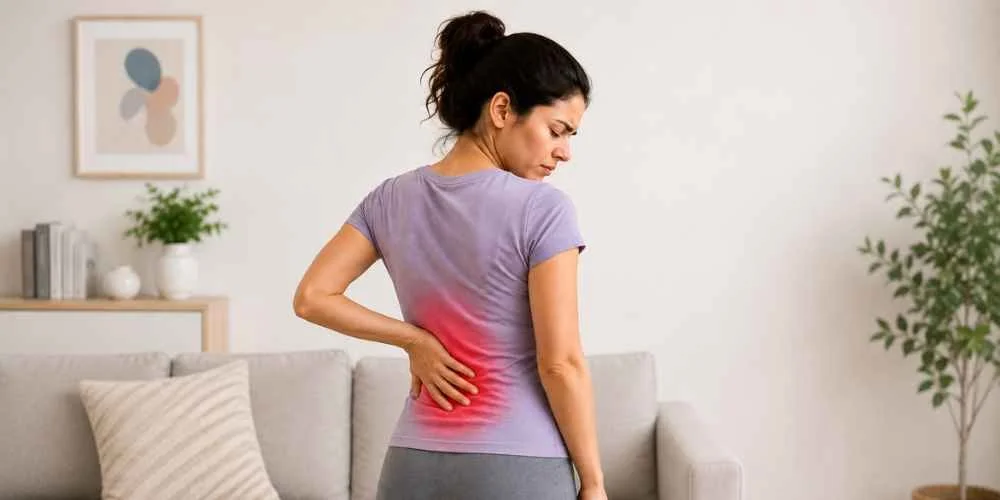
Not every case is hormonal or organ-related. Plain mechanical strain is still one of the most common explanations, in women and men alike.
Muscle or ligament strain: from lifting, twisting, or awkward sleeping positions. Usually improves within 2–4 weeks.
Sacroiliac (SI) joint dysfunction: irritation where your spine meets your pelvis. More common in women due to a wider pelvis and smaller SI joints, and often flares during pregnancy.
Sciatica: compression of the sciatic nerve, causing sharp or electric pain that can radiate down one leg.
Herniated disc: a disc bulges and presses on a nearby nerve, which can cause one-sided pain and sometimes leg symptoms.
Musculoskeletal pain, by contrast, often shifts with position, easing when lying down or changing posture, and flaring with specific movements like bending or twisting.
Self-Check: Does It Match Your Cycle?
One of the fastest ways to narrow down the cause is tracking when the pain shows up relative to your cycle:
Keeping a simple pain journal noting severity, timing, and any other symptoms for even 2–3 cycles can make a real difference in how quickly a doctor can identify the cause.
Relief and Self-Care: Treatment Options for Lower Left Back Pain in Females
Treatment depends heavily on the cause, but a few approaches help across the board:
1. Heat and Cold Therapy:
Cold therapy calms inflammation in the first 24–72 hours after a strain; heat therapy afterward boosts blood flow and eases muscle cramping, useful for both mechanical pain and menstrual cramps.
2. Gentle Movement:
Light stretching, walking, and core-strengthening exercises (like pelvic tilts or cat-cow stretches) can relieve both muscular tension and period-related back pain, though intensity should be reduced during pregnancy or a flare.
3. Over-the-Counter Anti-Inflammatories:
NSAIDs are a first-line option for both menstrual cramps and muscular pain, per the AAFP's dysmenorrhea guidelines; check with a doctor before use during pregnancy.
4. Posture and Lifestyle Adjustments:
Supportive footwear, avoiding prolonged sitting, and being mindful of how you lift can prevent a lot of mechanical strain before it starts.
5. When massage therapy helps
Massage won't treat a kidney infection or endometriosis, but for muscular and hormonal causes it can meaningfully ease symptoms:
For muscle strain and SI joint tension, targeted orthopedic massage helps release the tight muscles compensating around a strained area.
For menstrual pain, massage is a common non-pharmacological way to ease uterine-related muscle tension and improve circulation.
For pregnancy-related back pain, prenatal massage from a therapist trained in pregnancy-safe techniques is widely used for the ligament and postural strain of later trimesters.
If your pain is muscular, cyclical, or pregnancy-related rather than a red-flag symptom above, a session with a licensed massage therapist is a reasonable addition to your self-care routine.
Massage Treatment for Lower Left Back Pain in Females in Harrison & Nearby Areas
Bomi Massage offers both prenatal massage for pregnancy-related back pain and Hendrickson Method orthopedic massage and trigger point therapy for muscular and SI joint tension, all delivered by a New York State Licensed Massage Therapist with nearly 20 years of experience.
When to See a Doctor
Book an appointment if:
Pain lasts longer than 2 weeks despite rest and home care
It's disrupting sleep or daily activities
It's clearly tied to your cycle every month and getting worse over time
You suspect endometriosis, fibroids, or another gynecological cause
Seek care the same day if you notice any of the red-flag symptoms from the self-check section above: fever, numbness, bladder/bowel changes, or sudden severe pain.
Frequently Asked Questions
What Causes Left Lower Back Pain in Females?
Most often a muscle strain, menstrual cramps, or pregnancy-related changes. Less commonly, endometriosis, ovarian cysts, or a kidney infection or stone.
Why Does My Lower Back Hurt on the Left Side During My Period?
Prostaglandins cause the uterus to contract, and that discomfort commonly radiates to the lower back, sometimes more on one side.
Can a UTI Cause Lower Left Back Pain?
Yes, especially if the infection has spread to the kidneys. Watch for fever, burning urination, or cloudy or bloody urine.
Is Lower Left Back Pain Normal During Pregnancy?
Yes. Global studies put pregnancy-related back pain prevalence around 40% to 48%, especially in the third trimester, mostly from ligament changes and shifting posture. Sudden or severe pain should still be checked.
When Should I Worry About Left-Sided Back Pain?
If it's severe, lasts more than two weeks, or comes with fever, numbness, leg weakness, or bladder or bowel changes.
Can Stress Cause Lower Back Pain?
Yes. Stress and anxiety increase muscle tension and pain sensitivity, which can contribute to or worsen back pain, including on one side.