Massage Therapy for Postural Imbalances & Desk-Related Pain

Neck stiffness, shoulder tension, and lower back pain are common problems for people who spend hours sitting at a desk. Poor posture and limited movement can gradually create chronic muscular tension that affects comfort, mobility, and daily function.
This blog explains how desk-related posture problems develop, why muscular tension becomes chronic, and how massage techniques such as deep tissue massage and myofascial release may help reduce discomfort, improve mobility, and support better posture over time.
Why Desk Workers Commonly Experience Neck and Shoulder Tension
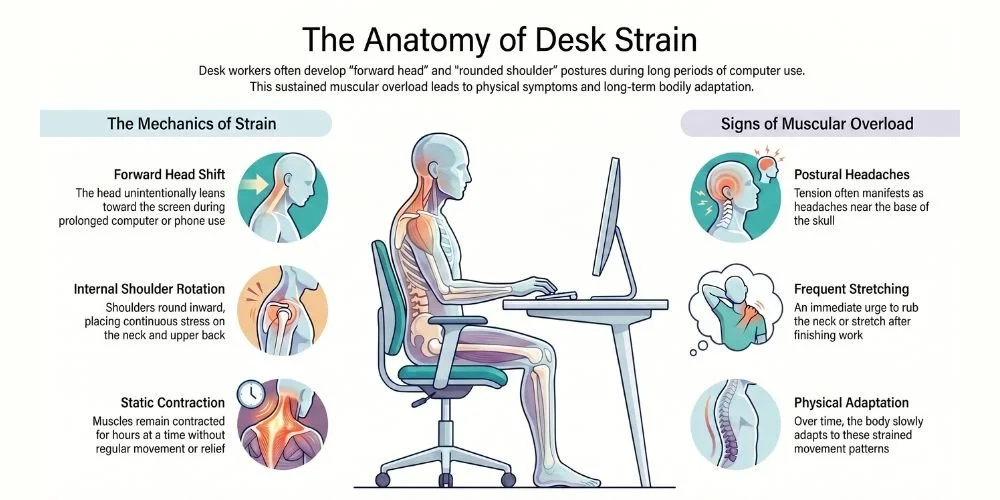
Many people unintentionally lean toward their screens during work. Over time, the head shifts forward while the shoulders round inward, placing continuous stress on the muscles supporting the neck and upper back.
These posture habits often develop gradually during long meetings, computer work, or prolonged phone use. Without regular movement, the surrounding muscles remain contracted for hours at a time.
A common example is someone finishing work and immediately rubbing the back of their neck or stretching their shoulders for relief. Others may experience headaches near the base of the skull after extended periods at a computer. These symptoms are often linked to muscular overload from sustained postural strain, which can sometimes extend to upper back discomfort similar to upper left back pain.
As these movement patterns continue, the body slowly adapts to them.
How Poor Posture Affects the Entire Body

Poor posture is rarely isolated to one area.
When the neck and shoulders remain tight, surrounding muscles begin compensating to maintain balance and movement. This may increase strain throughout the spine, hips, and lower back.
Prolonged sitting commonly shortens the hip flexors while reducing glute muscle activation. As a result, the lower back often absorbs more pressure during standing, walking, or bending movements.
Many desk workers experience symptoms such as:
● stiffness after sitting for long periods
● lower back pain
● shoulder fatigue late in the day
● reduced neck mobility
● tension headaches
● discomfort between the shoulder blades
In many cases, these symptoms develop gradually through repetitive strain and restricted movement rather than a sudden injury.
Why Muscle Tension Often Becomes Chronic
One reason desk-related discomfort becomes persistent is that people often normalize it.
Someone may assume neck stiffness is simply part of working on a computer all day. Another person may ignore shoulder tightness until it begins affecting sleep, exercise, or concentration.
Over time, muscles that remain tense for prolonged periods may become less flexible and more resistant to movement. Circulation may decrease in overloaded areas while connective tissue restrictions continue limiting mobility.
This is why some people still feel stiff even after resting for an entire weekend. The issue is often not simple fatigue, but repeated muscular stress without enough recovery or movement variation.
How Deep Tissue Massage Helps Relieve Postural Strain

Deep tissue massage is commonly used to address chronic muscular tightness associated with poor posture and sedentary work routines.
Unlike lighter relaxation massage, deep tissue techniques focus on deeper muscular layers where long-term restriction patterns frequently develop. This approach may help reduce tension in areas that remain overloaded during desk work. .
For example, someone spending most of the day at a computer may develop persistent tightness throughout the upper trapezius muscles, chest muscles, and lower back. Stretching alone may provide only temporary relief if deeper tissue restrictions remain unchanged.
Targeted deep tissue massage therapy may help:
● release muscular tightness
● improve tissue mobility
● reduce neck pain
● support back pain relief
● improve movement quality
● reduce stress-related muscle guarding
Many people notice they can move more naturally after treatment because the muscles are no longer resisting movement as strongly.
Role of Myofascial Release in Posture Therapy

Prolonged sitting affects not only muscles but also fascia, the connective tissue surrounding them. Limited movement may cause fascial restrictions that contribute to stiffness, reduced flexibility, and recurring tension.
Myofascial release techniques use sustained pressure and targeted soft tissue work to help reduce these restrictions and improve mobility.
This approach is commonly used for people who feel
● stiff after inactivity
● restricted during stretching
● recurring muscular tightness
For desk workers, myofascial release is often applied to the neck, shoulders, chest, hips, and lower back where posture-related restrictions commonly develop.
Why Forward Head Posture Creates Ongoing Neck Pain
Forward head posture is a common issue associated with prolonged desk work and screen use. It develops when the head repeatedly shifts in front of the shoulders, increasing strain on the neck and upper back muscles.
Over time, the body adapts to this position, which may lead to stiffness, reduced neck mobility, shoulder discomfort, and recurring tension during daily activities.
Stress and prolonged sitting often worsen these patterns by increasing muscular tightness throughout the neck and upper back.
Massage therapy for neck pain may help reduce tension in overworked muscles while improving mobility throughout the cervical spine and upper back.
Why Massage Therapy Works Best Alongside Movement
Massage therapy can help reduce muscular restrictions, but lasting posture improvement usually requires consistent movement habits as well.
Without changing repetitive strain patterns, tension often returns quickly.
Simple daily adjustments may significantly reduce physical stress, including:
● standing periodically during work hours
● improving monitor height
● stretching tight chest and hip muscles
● strengthening postural support muscles
● taking movement breaks between meetings
● reducing prolonged screen positioning
The goal is not maintaining perfect posture all day. The goal is helping the body move with less tension and less compensation.
Addressing Desk-Related Pain Before It Gets Worse
Mild stiffness and muscular tightness can gradually become more persistent when repetitive strain patterns remain unaddressed.
What begins as occasional discomfort may eventually affect sleep, workouts, concentration, and overall mobility. Early treatment may help reduce stress on overloaded muscles before symptoms become more limiting over time.
At Bomi Massage, therapeutic massage sessions are designed to help address desk-related muscular tension, posture issues, and movement restrictions through targeted techniques focused on long-term mobility, comfort, and physical function.
FAQ:
1. Can massage therapy relieve neck and shoulder pain from desk work?
Yes, deep tissue and myofascial release reduce tension and improve posture-related mobility.
2. How often should I get massage therapy for desk-related pain?
Weekly or bi-weekly sessions work best, combined with daily movement and stretching.
3. Which areas are most affected by desk posture?
Neck, shoulders, upper back, hips, and lower back commonly develop tension.
4. What’s the difference between deep tissue massage and myofascial release?
Deep tissue targets tight muscles; myofascial release loosens connective tissue restrictions.
5. Is massage therapy safe for everyone?
Generally yes, but consult a doctor if you have certain medical conditions or injuries.