Chronic Muscle Tension: Why It Happens & How Massage Breaks the Cycle

Chronic muscle tension is a condition marked by persistent tightness that does not fully resolve with rest or basic stretching. It usually develops due to repeated physical strain, prolonged poor posture, or ongoing psychological stress without sufficient recovery.
As this pattern continues, muscles remain in a partially contracted state. This can reduce circulation, limit movement, and contribute to ongoing discomfort. Understanding why this occurs is key to managing it effectively.
Explores the causes of chronic muscle tension, the cycle that maintains it, and how massage therapy can help in its management.
What Causes Muscle Tightness and Ongoing Stiffness

Chronic muscle stiffness develops when the body is exposed to repeated physical or mental stress without proper recovery. One of the most common causes is prolonged posture. Sitting for extended periods or maintaining the same position forces certain muscles to stay active longer than intended, leading to continuous tension in the muscles.
Stress also plays a direct role. The body naturally tightens muscles as part of its response to stress. When this response becomes constant, it creates lasting tightness even without physical strain.
Repetitive movements and previous injuries further contribute by altering movement patterns. Over time, this leads to imbalance and persistent discomfort.
According to the American Psychological Association, muscle tension is influenced by both physical strain and stress-related responses.
The Cycle of Chronic Muscle Tension
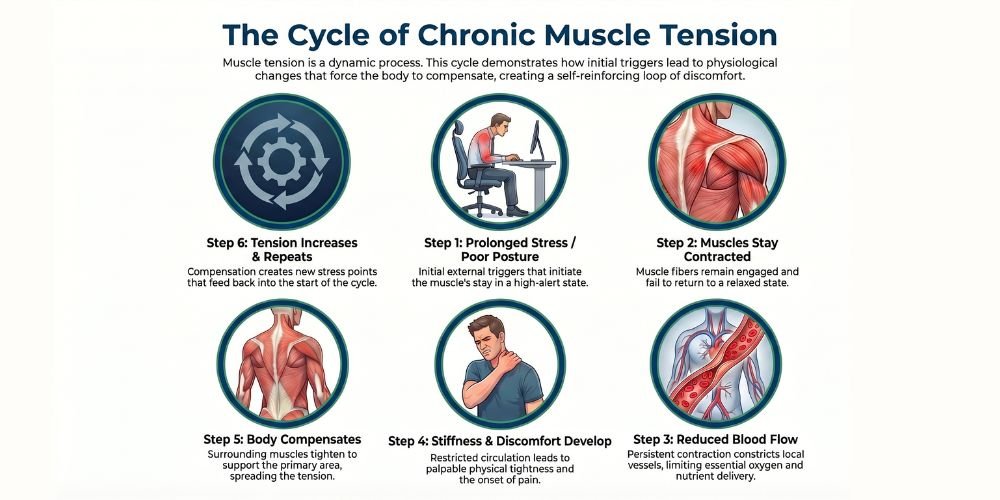
Chronic tension continues because the body adapts to it. This creates a repeating pattern:
● Muscles remain partially contracted
● Blood flow becomes restricted
● Oxygen supply decreases
● Discomfort or muscle rigidity develops
● Surrounding muscles compensate and tighten
How the Cycle Builds Over Time
How Massage Helps Release Chronically Tight Muscles
Understanding how to release chronical tight muscles requires addressing both the restriction and the pattern behind it. Massage therapy works by interrupting the cycle at multiple levels:
● Applies targeted pressure to release tight muscle fibers
● Improves circulation in restricted areas
● Reduces the stress response that keeps muscles contracted
● Restores natural movement patterns
As circulation improves, tissues receive the support needed to recover. At the same time, the nervous system shifts away from a constant tension state.To better understand the physiological mechanisms behind these benefits, explore our detailed guide on the science behind massage therapy. This blog explains how massage influences circulation, muscle recovery, and the nervous system at a deeper level.
Short-Term Relief vs Long-Term Muscle Tension Management
Muscle Tightness in Legs and Common Problem Areas
Chronic tightness often appears in specific areas of the body. Many individuals experience muscle tight in legs, especially in the calves and hamstrings, due to prolonged sitting or repetitive movement.
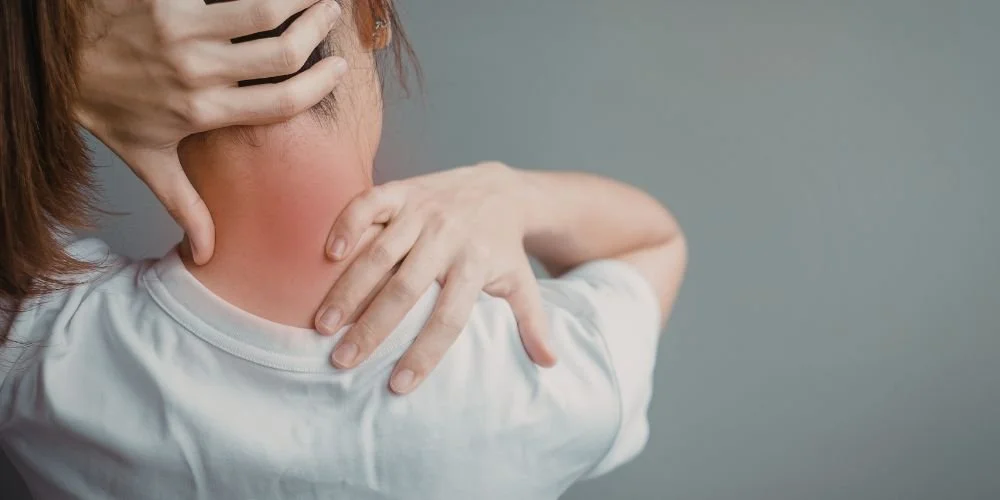
The neck and shoulders are also common areas where tension in the muscles builds from posture and daily stress. These patterns are not isolated, they reflect how the body adapts to repeated strain over time.
Common Areas of Muscle Tension
Massage addresses both the affected area and the surrounding muscles that contribute to the imbalance.
How to Ease Aching Muscles and Prevent Recurrence
Knowing how to ease aching muscles is important, but long-term improvement depends on consistency. Occasional relief methods may reduce discomfort temporarily, but they do not change the underlying pattern of chronic muscle stiffness.
Regular movement, proper recovery, and targeted therapy help prevent tension from building again. Massage therapy supports this process by releasing accumulated tightness before it becomes persistent.
Breaking the Cycle of Muscle Tension at Bomi Massage
Chronic muscle tension does not resolve when the underlying cycle remains active. Addressing it requires a focused approach that works on both the muscles and the patterns that keep them tight.
Massage therapy, when applied with consistency and proper technique, helps reduce muscle rigidity, improve movement, and support long-term physical balance. This approach continues to guide how therapy is applied at Bomi Massage, where the focus remains on relieving persistent stiffness and restoring functional movement through targeted care.
FAQ:
1. How do you get rid of chronic muscle tension?
Chronic muscle tension is best relieved through a combination of massage therapy, regular movement, stress management, and proper posture. Massage helps release tight muscles, improve circulation, and reset the tension cycle, making long-term relief possible.2. Why do my muscles feel tight all the time?Muscles feel constantly tight due to prolonged sitting, stress, repetitive movements, or past injuries. Over time, the body adapts to this tension, causing muscles to remain partially contracted even at rest.
3. Can massage therapy permanently relieve muscle tension?
Massage therapy can significantly reduce and manage chronic muscle tension, but lasting results depend on consistency. Regular sessions combined with lifestyle changes help prevent the tension from returning.
4. What type of massage is best for muscle tightness?
Deep tissue massage and therapeutic massage are most effective for chronic muscle tightness. They target deeper muscle layers, release knots, and improve blood flow to affected areas.
5. How often should I get a massage for tight muscles?
For chronic muscle tension, weekly or biweekly massages are typically recommended. Once the tension improves, maintenance sessions can be done monthly.