Is PNF Stretching the Most Effective Way to Increase Mobility?
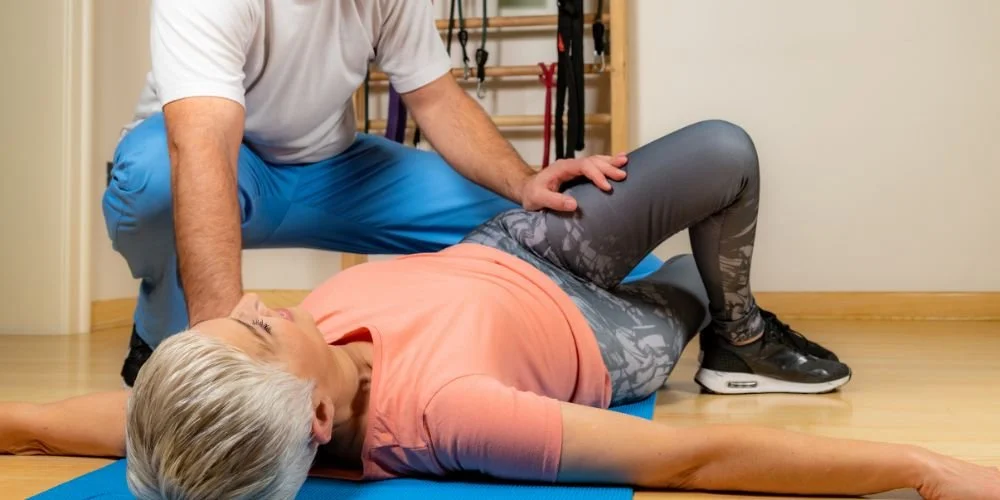
Mobility plays a crucial role in how comfortably and efficiently your body moves every day. Whether you are an athlete, a desk worker, or someone recovering from injury, limited flexibility can lead to stiffness, poor posture, muscle imbalance, and ongoing discomfort. Many people rely on traditional stretching exercises to improve flexibility but often experience only temporary results.
This is where PNF stretching stands out. Widely used in rehabilitation and professional therapy settings, this advanced method improves communication between muscles and the nervous system rather than simply lengthening muscles. But is it truly the most effective way to increase mobility?
Let’s explore how PNF works, the different types of PNF stretching, and why it has become one of the most trusted mobility techniques used by therapists and movement professionals.
What Is PNF Stretching?
PNF stands for Proprioceptive Neuromuscular Facilitation, a therapeutic stretching approach originally developed to help patients regain movement after neurological injuries. Over time, therapists discovered that these same techniques significantly improve flexibility, strength, and joint mobility.
Unlike static stretching — where a muscle is held in one position — PNF stretching combines three active phases:
Stretching a muscle
Contracting that muscle
Relaxing into a deeper stretch
This sequence activates neurological reflexes that allow muscles to release tension more effectively. Instead of forcing flexibility, PNF works with the body’s natural protective systems to safely expand range of motion.
Because muscles actively participate, PNF techniques often produce more functional and longer-lasting mobility improvements than passive stretching exercises.
How PNF Stretching Works with Your Nervous System
The effectiveness of PNF stretching comes from how it interacts with the nervous system. Unlike traditional stretching exercises that focus only on muscle length, PNF techniques improve communication between muscles and nerves to support controlled and lasting mobility improvements — a principle also used in neuro massage therapy to restore proper neuromuscular function.
Your body naturally prevents muscles from overstretching to protect against injury. PNF temporarily reduces this resistance using two key neurological responses:
Autogenic Inhibition
When a muscle contracts against resistance, receptors in the tendon signal the brain to allow deeper relaxation afterward, enabling a greater stretch. This response helps release built-up muscular tension often associated with chronic muscle tensionand restricted movement patterns.Reciprocal Inhibition
When one muscle group contracts, the opposing muscle automatically relaxes. This allows improved mobility while maintaining joint stability and coordinated movement, which is especially important for individuals experiencing nerve-related discomfort such as sciatica.
By combining contraction and relaxation phases, PNF stretching improves flexibility safely without aggressive force while enhancing overall neuromuscular control.
Types of PNF Stretching Techniques
PNF stretching includes several techniques that apply the same neurological principles in slightly different ways depending on mobility goals.
1. Hold–Relax Technique
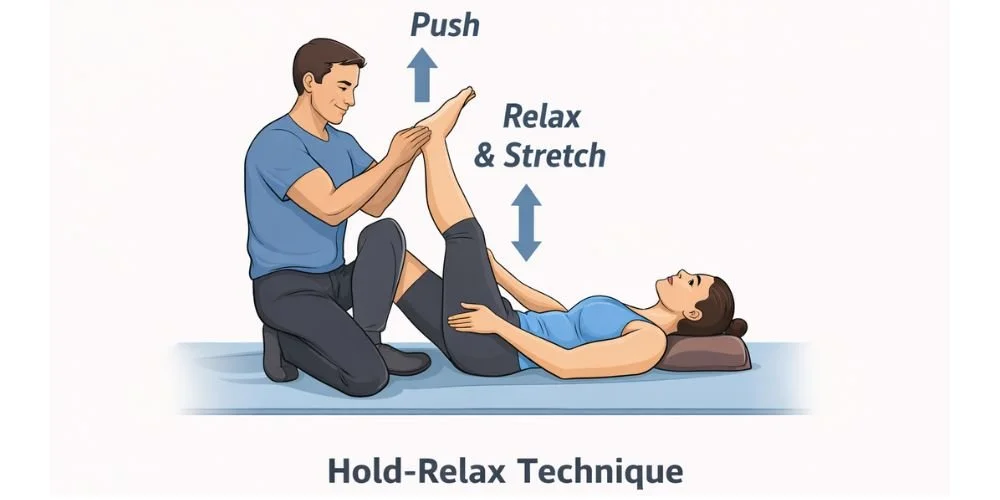
The Hold–Relax method begins with placing a muscle into a gentle stretch. The individual then performs an isometric contraction against resistance without movement for several seconds before relaxing completely. After relaxation, the muscle allows a deeper stretch.
For example, during a hamstring stretch, a therapist lifts your leg while you gently push against resistance. Once you relax, the leg moves further into the stretch, improving range of motion safely.
2. Contract–Relax Technique
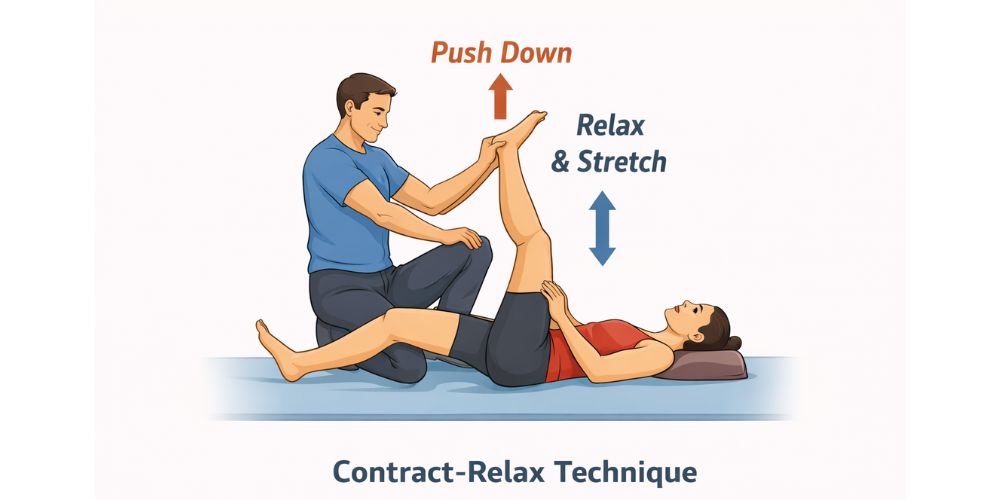
The Contract–Relax technique includes controlled movement during the contraction phase. Instead of holding still, the muscle actively moves against resistance before relaxing into a deeper stretch.
A common example is a hip flexibility stretch where you slowly press your leg downward against resistance. After relaxation, increased joint mobility becomes noticeable. This method works well for improving functional movements such as walking or bending.
3. Contract–Relax–Antagonist–Contract (CRAC)
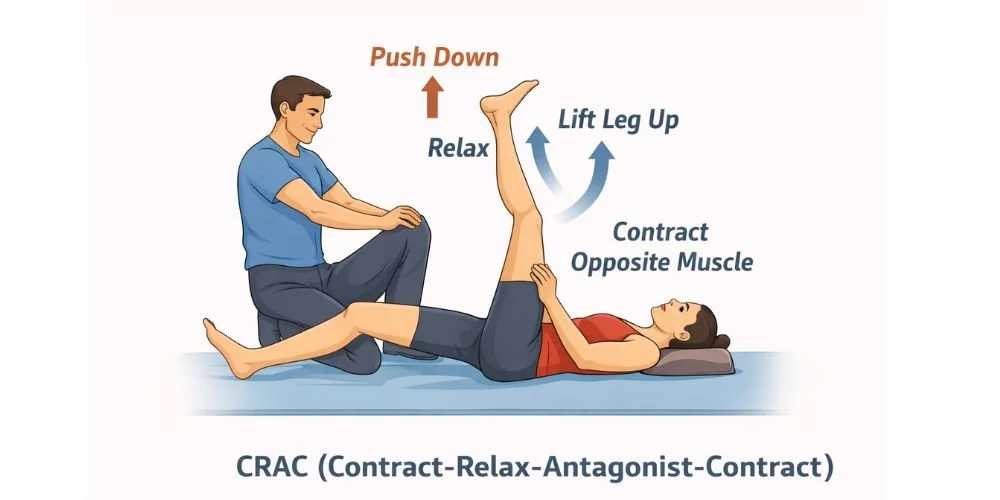
The CRAC technique adds activation of the opposing muscle group to deepen the stretch further. After contracting and relaxing the target muscle, you actively contract the opposite muscle, encouraging additional relaxation through reciprocal inhibition.
For instance, while stretching the hamstrings, activating the quadriceps helps lift the leg higher while allowing the hamstrings to release tension. This technique improves flexibility and muscular control simultaneously.
4. Hold–Relax–Contract Technique
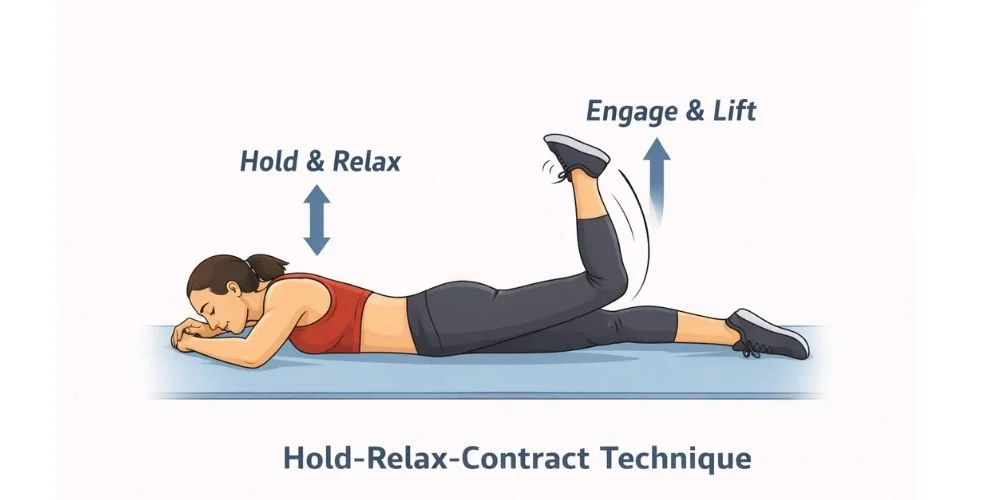
This method builds on Hold–Relax by adding active movement after relaxation. Once the muscle releases tension, the opposing muscle group actively moves the body deeper into the stretch.
An example includes stretching hip flexors and then engaging the glutes to extend the leg backward. This strengthens muscles within the new range of motion, improving stability and long-term mobility.
Step-by-Step Guide to Performing PNF Stretching
Because PNF involves muscle activation, proper technique is essential.
Step 1: Warm Up
Begin with light activity such as walking or mobility drills for 5–10 minutes.
Step 2: Enter a Gentle Stretch
Move slowly into mild tension without pain.
Step 3: Contract the Muscle
Apply 50–70% effort against resistance for 6–10 seconds.
Step 4: Relax and Breathe
Release tension completely while breathing slowly.
Step 5: Deepen the Stretch
Move further into the stretch and hold for 20–30 seconds.
Step 6: Repeat
Perform 2–4 cycles depending on comfort and mobility goals.
Working with a trained therapist ensures proper resistance and alignment.
Why PNF Stretching Is Highly Effective for Hip Mobility
Restricted hips are a major contributor to movement limitations and discomfort, especially for individuals who sit for long hours. Tight hip flexors can lead to lower back stress, reduced flexibility, and poor posture.
PNF techniques are highly effective for hip flexibility stretches because they target deeper muscle layers often missed by traditional stretching exercises.
Benefits include:
Increased joint range of motion
Improved posture and alignment
Reduced lower back strain
Better athletic performance and movement efficiency
PNF develops functional flexibility by strengthening muscles while lengthening them.
PNF Stretching vs Traditional Stretching Exercises
Traditional stretching exercises help maintain flexibility but mainly focus on muscle length. PNF stretching goes further by improving neuromuscular coordination.
PNF stretching:
Engages muscles actively
Improves brain-muscle communication
Builds strength within new movement ranges
Often produces faster mobility improvements
Rather than replacing traditional stretching, PNF is ideal when flexibility progress plateaus.
Key Benefits of PNF Stretching
Increased flexibility and mobility – PNF techniques help improve joint range of motion and are often combined with PNF stretching therapy to achieve deeper, long-lasting mobility improvements.
Faster recovery after activity – Improved circulation and muscle activation support recovery, similar to the benefits provided through sports massage therapy for active individuals and athletes.
Reduced muscle stiffness and tension – PNF stretching helps release deep muscular tightness often addressed alongside trigger point therapy, which targets persistent muscle knots and restrictions.
Improved athletic performance – Enhanced flexibility and neuromuscular coordination allow more efficient movement patterns and injury prevention strategies.
Better movement control and stability – Strengthening muscles within new ranges of motion improves overall balance and joint support.
Who Can Benefit from PNF Stretching?
PNF stretching is beneficial for:
Athletes seeking performance improvement, especially when combined with sports massage therapy to enhance recovery and mobility.
Individuals with chronic muscle tightness, often related to chronic muscle tension caused by posture, stress, or repetitive strain.
Desk workers experiencing stiffness, where mobility-focused treatments help counter prolonged sitting and postural imbalance.
Injury rehabilitation patients, who may benefit from approaches similar to hendrickson method orthopedic massage that restore joint function and movement quality.
Anyone struggling with limited mobility and looking for structured therapeutic solutions.
Because it is an advanced method, professional guidance is recommended for best results.
Improve Mobility with Professional PNF Stretching at Bomi Massage
PNF stretching goes beyond traditional stretching exercises by improving how muscles and the nervous system work together. Instead of creating temporary flexibility, it promotes lasting mobility, improved movement control, and reduced physical tension.
At Bomi Massage, professional PNF Stretching Therapy is designed to help clients improve flexibility, reduce chronic stiffness, support recovery, and move with greater comfort and confidence. With personalized therapeutic care, PNF stretching becomes a structured path toward long-term mobility and overall physical wellness.
Frequently Asked Questions
Is PNF stretching better than static stretching?
PNF stretching is often more effective for increasing mobility because it combines muscle contraction and relaxation, allowing deeper flexibility gains compared to static stretching alone.
How often should you do PNF stretching?
Most people benefit from PNF stretching two to three times per week, allowing muscles adequate recovery between sessions.
Is PNF stretching safe for beginners?
Yes, but beginners should ideally perform PNF techniques under professional guidance to ensure correct resistance and positioning.
Does PNF stretching help hip flexibility?
Yes. PNF techniques are highly effective for hip flexibility because they target deeper muscles and improve joint mobility.
Can PNF stretching reduce pain and stiffness?
PNF stretching helps release muscle tension, improve circulation, and restore movement patterns, which can reduce stiffness and discomfort.