The Science Behind Massage Therapy: How It Works

Massage therapy is often associated with relaxation, but that only reflects a small part of what is actually happening in the body. Each session involves a series of physical and neurological responses that directly influence how muscles function, how blood circulates, and how the body handles stress.
This blog explains the science of massage, how it interacts with the body’s systems, and why the benefits of massage therapy are often linked to measurable changes rather than temporary comfort.
How Does Massage Therapy Work in the Body?
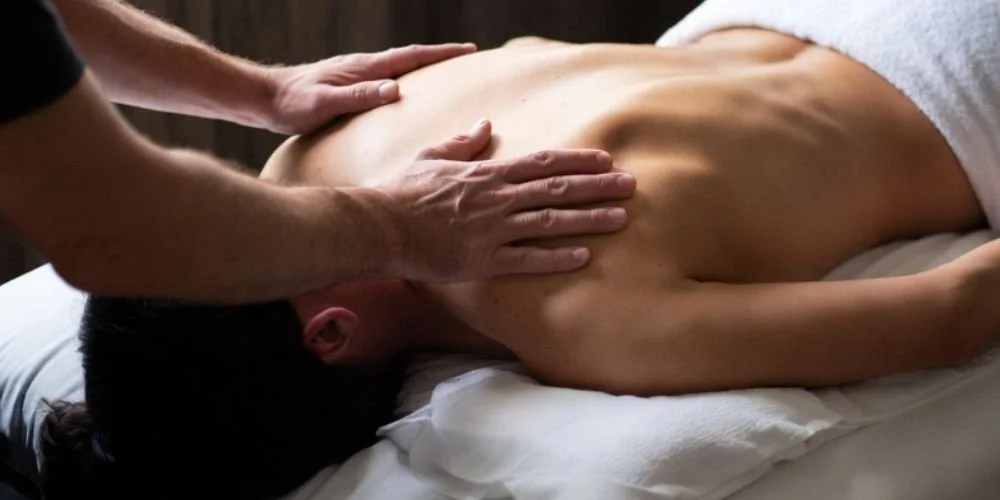
Massage therapy works by applying controlled pressure to soft tissues, including muscles, tendons, and connective structures. These techniques, such as compression, stretching, and rhythmic movement, stimulate physiological responses within the body.
This process increases local blood circulation, allowing oxygen and essential nutrients to reach tissues more efficiently. At the same time, metabolic waste products are removed more effectively.
As a result, muscle stiffness is reduced, tissue flexibility improves, and overall movement becomes more efficient. These changes form the foundation of how massage therapy supports physical function.
Research from the National Center for Complementary and Integrative Health supports the role of massage therapy in promoting muscle relaxation and functional improvement.
The Science of Massage and the Nervous System
The science of massage is strongly connected to how the nervous system responds during treatment. The body constantly shifts between states of alertness and recovery, and massage helps guide it toward a more stable, relaxed condition.
When consistent pressure is applied, the body begins to move away from a stress-driven state. Heart rate slows, breathing becomes more regular, and muscle tension starts to decrease. This shift supports a more balanced internal state.
Research supported by the National Institutes of Health shows that massage can help regulate stress responses by influencing the nervous system.
Benefits of Massage Therapy for Pain Relief
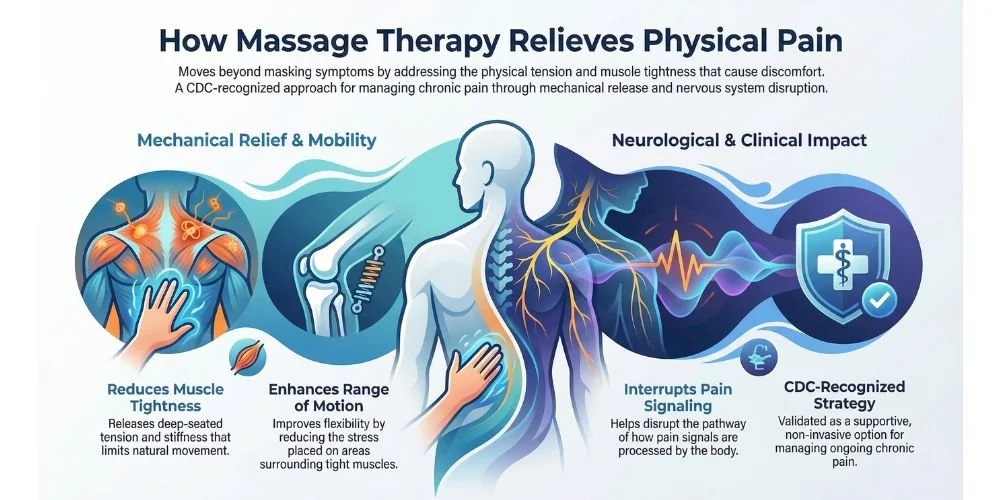
The benefits of massage therapy are often most noticeable in how the body responds to pain. Instead of covering up discomfort, massage works by addressing the physical tension that contributes to it.
When muscles stay tight for long periods, they limit movement and place stress on surrounding areas. Massage helps release this tension, allowing the body to move more freely.
Key ways massage supports pain relief:
● Reduces muscle tightness and stiffness
● Improves flexibility and range of motion
● Helps interrupt how pain signals are processed
The Centers for Disease Control and Prevention recognizes non-invasive approaches like massage as supportive options in managing chronic pain. This is why massage is often used as part of a structured approach to managing ongoing discomfort.
How Massage Improves Circulation and Recovery
Massage therapy improves circulation by stimulating blood flow to targeted areas of the body, allowing tissues to receive oxygen and essential nutrients more efficiently. It also supports the lymphatic system, which helps remove metabolic waste and maintain internal balance.
These effects contribute to faster recovery after physical strain, reduced muscle fatigue, and improved overall mobility. With regular sessions, these benefits become more consistent, supporting better tissue health and long-term physical function.
How Massage Reduces Stress and Mental Fatigue
Stress does not stay limited to the mind. It often builds up physically in the body, especially in areas like the shoulders, neck, and lower back.
Massage therapy works by addressing this buildup directly. As muscle tension is reduced, the body begins to shift into a calmer state. This also supports the release of chemicals that help regulate mood and relaxation.
From a scientific perspective, this connection between physical touch and stress response is well documented in the broader study of Neuroscience, where physical stimuli influence how the brain processes stress.
This is a key part of the science of massage, showing how physical techniques can lead to measurable mental changes.
Long-Term Benefits of Massage Therapy
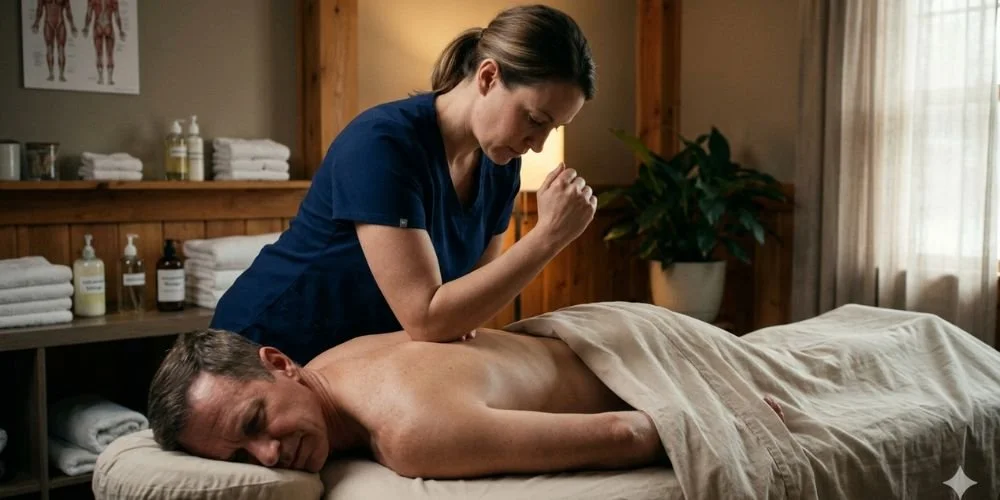
The benefits of massage therapy become more consistent when sessions are part of a regular routine. Rather than acting as a temporary solution, massage supports long-term physical balance.
Important long-term effects include:
● Improved posture through reduced muscle imbalance
● Better joint movement and flexibility
● Lower risk of strain caused by tight muscles
● More consistent sleep patterns
These outcomes are especially relevant for individuals with repetitive routines or physically demanding schedules.
Massage and Benefits in Everyday Life
Massage therapy applies to more than just recovery. It supports a wide range of everyday situations where the body experiences ongoing stress.
Common examples include:
● Sitting for long hours leading to back and neck tension
● Repetitive movements causing muscle fatigue
● General stress affecting both physical and mental state
In each of these situations, massage provides a structured way to manage tension and support daily function. This is why health massage continues to be used as part of regular care rather than occasional relief.
Experience the Science of Massage Therapy at Bomi Massage
Understanding how massage therapy works provides a clearer perspective on its role in physical and mental well-being. The science of massage shows that its effects are not limited to relaxation but extend to circulation, muscle function, and nervous system regulation.
As these responses build over time, massage becomes a consistent way to manage tension, support movement, and maintain balance in everyday life. This structured, results-focused approach is reflected in how therapy is applied at Bomi Massage, where the focus remains on addressing real physical concerns through targeted, practical care.
FAQ:
1. How does massage therapy affect the body?
It stimulates muscles and connective tissues, increases oxygen flow, removes metabolic waste, and promotes relaxation through nervous system responses.
2. What happens to muscles during a massage?
During a massage, muscle fibers are stretched and compressed, which helps release tightness, improve flexibility, and restore normal movement patterns.
3. Is massage therapy supported by scientific research?
Yes, multiple studies show that massage therapy can improve circulation, reduce stress hormones, and support pain management through measurable physiological changes.
4. How does massage therapy reduce pain scientifically?
Massage reduces pain by relieving muscle tension, improving mobility, and influencing how pain signals are processed by the nervous system.
5. What is the science behind massage therapy?
The science behind massage therapy involves how pressure applied to muscles and soft tissues improves circulation, reduces tension, and influences the nervous system to promote relaxation and recovery.