Sciatica Stretches and Exercises Recommended by Massage Therapist

Sciatic nerve pain affects a substantial share of the population at some point in their lives, and according to the National Library of Medicine's MedlinePlus, it is most common in adults between the ages of 30 and 50. While massage therapy addresses the muscle tension surrounding the sciatic nerve, our licensed therapist also guides clients through evidence-informed therapeutic exercises for sciatica that reduce pressure on the nerve and help prevent recurring flare-ups. Below is the routine of sciatica stretches and exercises our team recommends, along with the movements to avoid.
Sciatica Stretches Our Therapist Recommends
These sciatic nerve exercises and stretches are designed to loosen the muscle groups like glutes, hamstrings, and piriformis that most commonly compress the nerve. Our licensed massage therapist guides clients through this exact sequence during and after treatment sessions.
Seated Piriformis Stretch

Sit tall, cross one ankle over the opposite knee, and gently lean forward until you feel a stretch through the hip. Hold for 20–30 seconds per side.
2. Knee-to-Chest Stretch
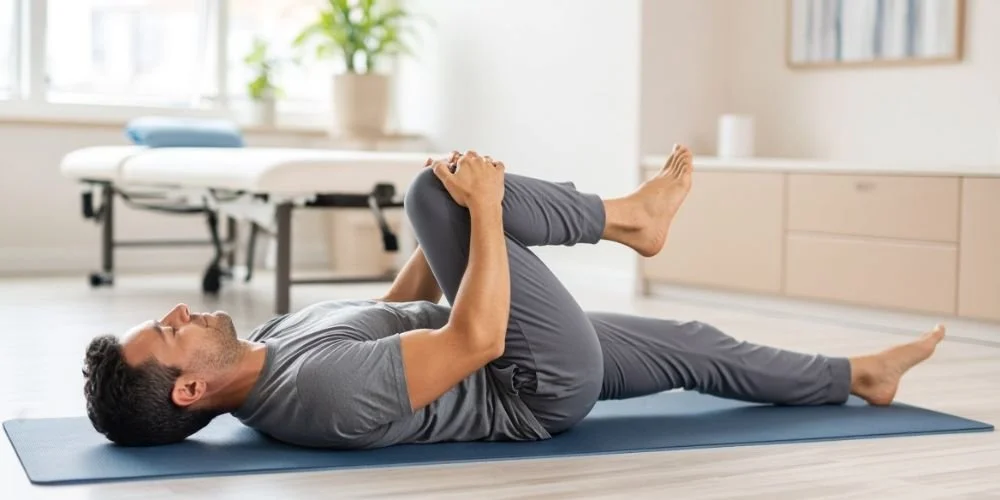
Lie on your back, pull one knee toward your chest, and hold. This gently decompresses the lower spine.
3. Reclining Pigeon Pose

A gentler variation of the seated figure-4, performed lying down, ideal for clients who find sitting upright uncomfortable.
4. Cat-Cow Stretch
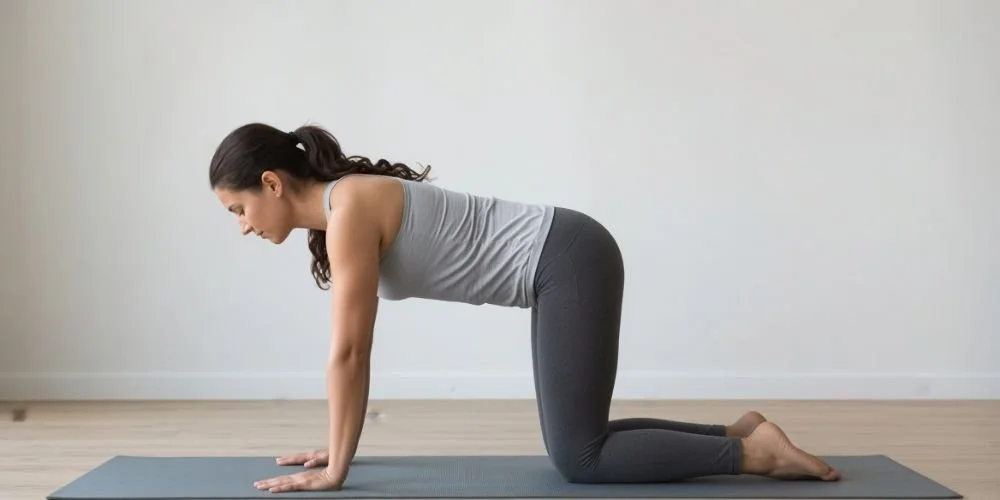
From hands and knees, alternate arching and rounding the spine to restore mobility through the lower back.
5. Standing Hamstring Stretch
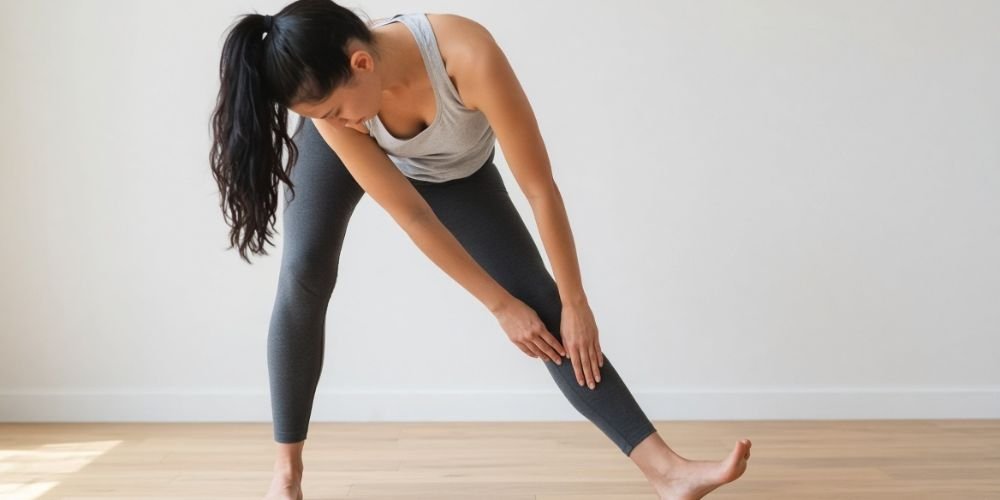
Prop one heel on a low surface and hinge forward from the hips. Tight hamstrings are a well-documented contributor to sciatic nerve irritation.
6. Seated Spinal Twist
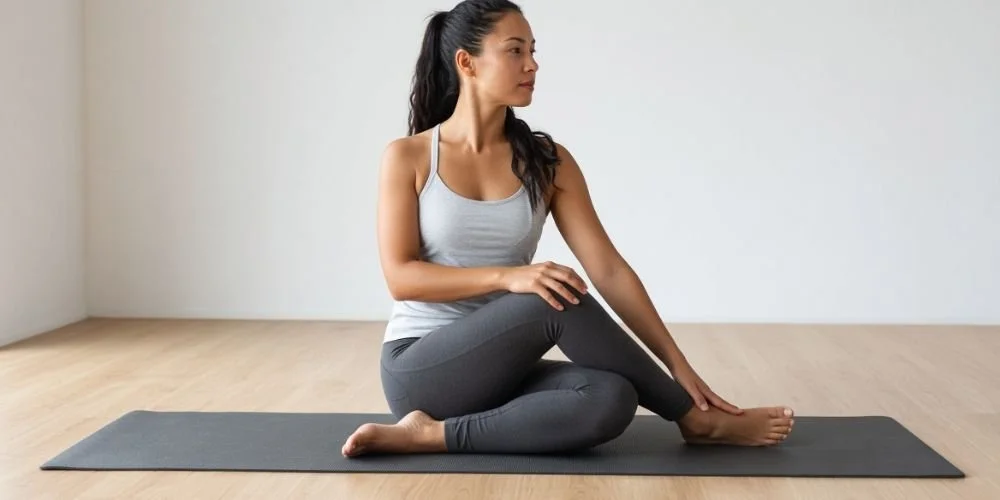
Gently rotate the torso while seated to release tension along the spine and hips.
These stretches to help sciatic nerve pain are among the most frequently prescribed by both physical therapists and massage therapists, because they approach the same muscle groups from complementary angles, one through active movement and the other through manual pressure. Hold each position for 20–30 seconds without bouncing, and discontinue immediately if you experience sharp or radiating pain.
PT-Style Sciatica Exercises to Build Long-Term Relief
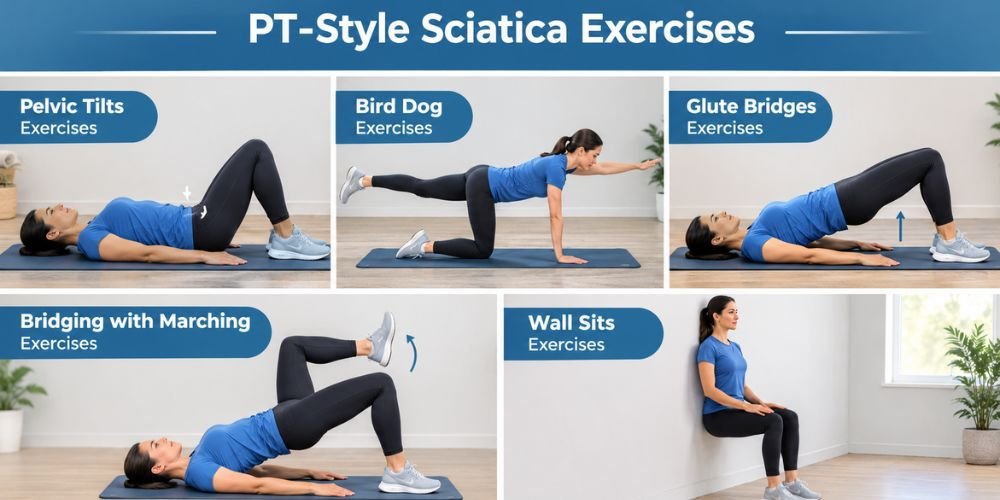
Stretching loosens tight tissue, but effective exercises to relieve sciatica for the long term also depend on building strength. A stronger core and glutes reduce the load on the lower spine and sciatic nerve, which is why these PT sciatica exercises are frequently paired with massage therapy as part of a complete treatment plan.
Pelvic Tilts
Lying on your back with knees bent, flatten your lower back into the floor by engaging your abdominal muscles. Repeat 10–15 times.
Bird Dog
From a hands-and-knees position, extend one arm and the opposite leg simultaneously while keeping the spine neutral. This builds core stability without straining the back.
Glute Bridges
Lie on your back with knees bent and lift the hips toward the ceiling, squeezing the glutes at the top of the movement.
Bridging with Marching
Once bridges feel manageable, add a marching motion to further challenge hip stability.
Wall Sits
Strengthen the quads and glutes without loading the spine; hold for 20–30 seconds and repeat.
Aim for 10–15 minutes of these sciatica exercises three to four times per week, alongside a daily stretching routine, for measurable improvement over several weeks.
Massage Stretches for Sciatica You Can Do Between Sessions
Beyond formal PT-style stretches, our therapist often recommends simple massage stretches for sciatica that clients can perform at home with basic tools:
Foam rolling the glutes and hamstrings to replicate the effect of myofascial release
Tennis ball release placed under the piriformis while lying on your back with knees bent
Self-massage with a massage gun on tight glute and hip muscles prior to stretching
These techniques are not a substitute for professional massage, but they extend its benefits and help prevent muscles from tightening again between appointments.
Sciatica Exercises to Avoid
Not every movement is beneficial for sciatica; some exercises can worsen nerve irritation, particularly during an active flare-up. Our therapist recommends avoiding the following activities when they increase pain or nerve irritation:
Heavy lifting and deadlifts, which place direct strain on the lower spine
High-impact activities such as running or jumping, which can jolt the nerve pathway
Twisting sports like golf or tennis and deep spinal-twist yoga poses, which can aggravate nerve compression
Forward toe touches during the acute phase, which often overstretch an already irritated nerve
Sit-ups and crunches, which compress the lower spine and can intensify symptoms
If a stretch or exercise produces sharp, shooting, or worsening pain, stop immediately and substitute a gentler alternative.
When to Stretch vs. When to See a Professional
Mild, intermittent sciatic discomfort typically responds well to consistent stretching and exercise. However, both MedlinePlus and NIAMS recommend seeking medical evaluation if you experience:
Numbness or weakness in the leg or foot
Pain that fails to improve after several weeks of self-care
Loss of bladder or bowel control (a medical emergency requiring immediate care)
NIAMS also recommends simple daily adjustments, such as sleeping on your side with a pillow between the knees and avoiding prolonged sitting or standing, as supportive habits alongside any exercise routine.
How Massage Therapy Ties It All Together
Stretching and strengthening address the muscular contributors to sciatica, but deep tissue work, including myofascial release and targeted piriformis massage, reaches tension that exercise alone often cannot resolve. Clients who combine this at-home routine with regular massage sessions typically report faster, more lasting relief. For a closer look at the manual techniques involved, see our companion guide on massage techniques for sciatica pain relief.
Other Therapies That Support Sciatica Recovery
A couple of our specialized therapies pair especially well with the stretches and exercises above:
PNF Stretching Therapy combines passive stretching with isometric contractions to achieve a deeper, more lasting release than static stretching alone, a useful next step once basic stretches like the ones above start to feel too easy.
Trigger Point Therapy targets the tight muscle knots, often in the piriformis or glutes, that are a frequent underlying cause of sciatic nerve compression. Addressing these knots directly can relieve pressure on the nerve faster than stretching alone.
Neuro Massage focuses on calming the nervous system itself, which makes it especially well-suited for sciatica since the condition is rooted in nerve irritation rather than muscle strain alone. It's often the closest match for cases where nerve pain persists despite consistent stretching.
Building a Daily Sciatica Relief Routine
Consistency, not intensity, is what produces results with sciatica. A few minutes of stretching each morning, PT-style strengthening several times a week, and awareness of movements to avoid can meaningfully reduce the frequency of flare-ups over time. When self-care isn't enough, our licensed therapist at Bomi Massage is here to help address the root cause. Schedule a session today and take the next step toward lasting relief.
FAQ
1. What are the best sciatica stretches for beginners?
Gentle stretches like the knee-to-chest stretch, cat-cow, and seated piriformis stretch (figure 4) are ideal starting points. They're low-intensity, easy to perform at home, and target the muscles most commonly involved in sciatic nerve compression.
2. How often should I do sciatica exercises?
Most massage therapists recommend stretching daily and doing strengthening exercises like glute bridges and bird dogs 3–4 times per week. Consistency matters more than intensity; overdoing it can aggravate the nerve.
3: Can exercise make sciatica worse?
Yes, certain movements like heavy lifting, high-impact activities, deep twists, and sit-ups can worsen nerve irritation, especially during a flare-up. If any stretch or exercise causes sharp or radiating pain, stop immediately.
4: Is massage or exercise better for sciatica?
They work best together. Exercises and stretches build strength and flexibility over time, while massage therapy, especially trigger point or neuro massage, directly releases the muscle tension and nerve irritation causing the pain. Combining both typically produces faster, longer-lasting relief.